
The PACT Act expanded disability benefits for Veterans exposed to toxic substances during service. To support these claims, the VA needed to add toxic exposure questions to the 526ez digital form.
Paper forms and digital forms follow different logic. A paper form crams multiple questions onto each page to save printing costs. A digital form follows "One Thing per Page" guidance, spreading questions across screens to reduce cognitive load. The mapping between the two isn't 1:1.
The team also had to consider what happened after submission. The digital form ultimately populates a PDF that claims processors use to review the case. Paper becomes digital becomes paper again. Every field in the online form had to connect to the right place in the downstream PDF and the Lighthouse API that powered it.
No one on the team had built something this large before. Designers, engineers, and product managers had to align on how questions would flow, what data would be captured, and how it would map to both the paper form and the API.
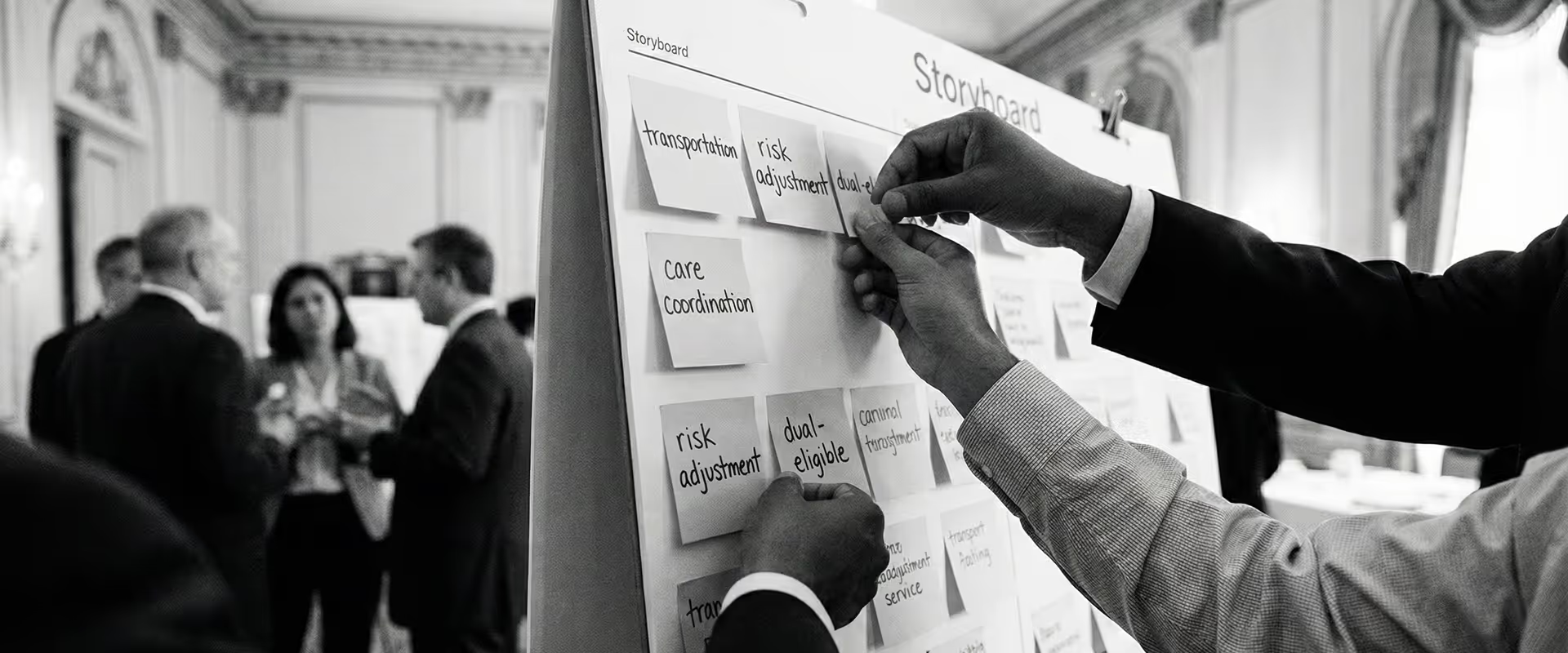
The team used Mural to compare three things side by side: screenshots of the paper form, the Lighthouse API structure, and proposed design mocks. Gaps became visible immediately. When the API didn't support a field the design needed, the team could see it and work toward alignment before writing code.
Understanding the end users mattered too, and not just Veterans. VSRs and RVSRs, the claims processors who review submissions, would use this data to make decisions. The team worked with them to understand what information they needed and how they expected to receive it.
Partway through implementation, the engineers discovered a problem. The existing VA forms tooling couldn't support the flow the designs required: a checkbox-driven pattern where selecting multiple options generated a separate page for each one. The team collaborated with the VA forms platform team, who built a Proof of Concept using existing tooling. That POC became the "Checkbox and Loop Flow," a new pattern that followed One Thing per Page guidance while handling multiple responses.
The work surfaced a testing gap too. The team added toggle-aware end-to-end tests so they could verify both the existing production flow and the new feature simultaneously, catching regressions before they shipped.
The digital form ended up improving on the paper version. Better data for the processors who turn it back into paper. Better outcomes for the Veterans who started there.