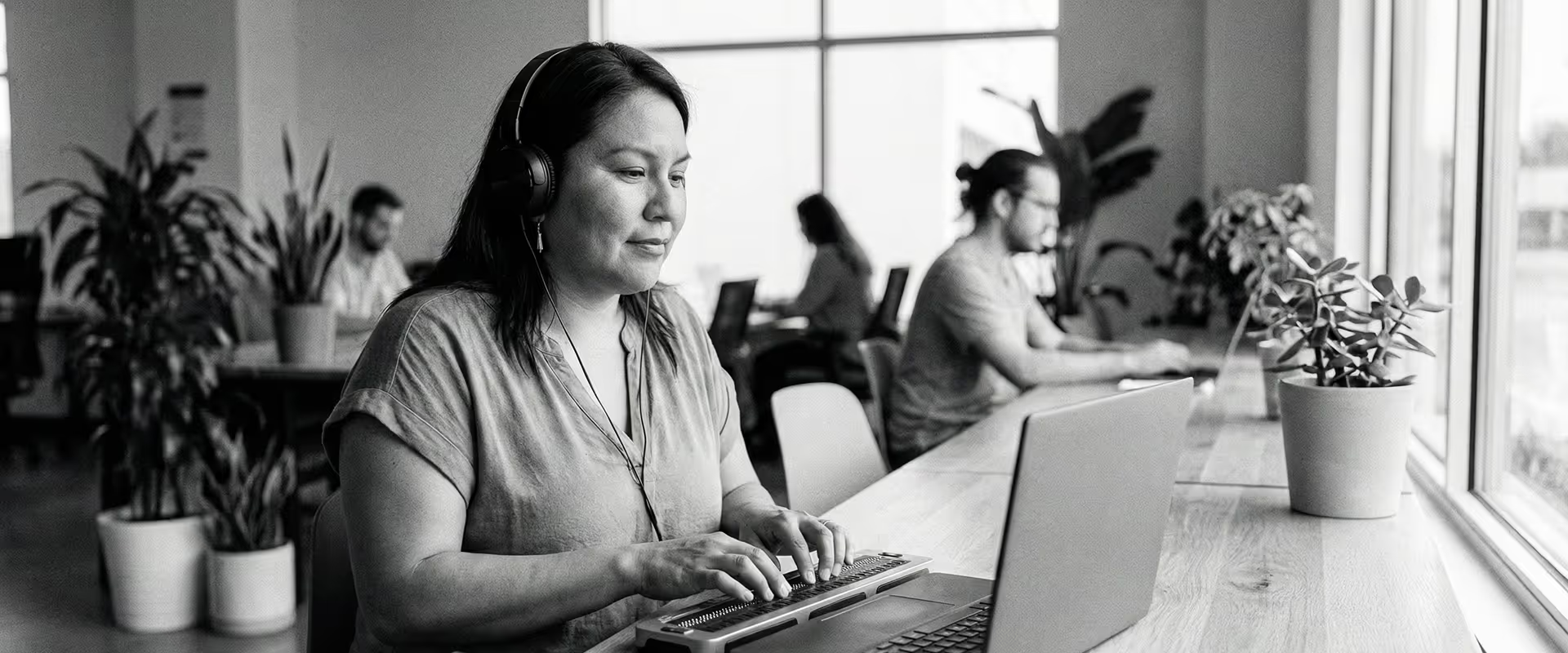
Alt text is how screen reader users experience images. When it's written well, a Veteran who is blind can understand what's on the page. When it's written poorly, they get noise: file names, redundant phrases, descriptions that don't describe anything.
The VA's Drupal CMS had a problem. Audits showed that over 65% of alt text contained redundancies like "image of" or "photo of," phrases that screen readers already announce automatically. About 20% contained file extensions, meaning someone had uploaded an image and left the file name as the description. These patterns persisted month after month, for over a year.
Editors weren't ignoring accessibility. They just didn't know the rules. Many had no prior experience writing for the web, and the CMS didn't tell them when they got it wrong.
Training and documentation hadn't fixed the problem. The team decided to try something different: build the guidance into the moment of creation.
The proposal was error messaging during the image upload process. When an editor wrote alt text that contained a redundancy, a file extension, or exceeded 150 characters, they'd see a specific message explaining the issue. The feedback would arrive while they were still working, not in an audit weeks later.
The team built a prototype in Figma and tested it with five VAMC editors in 60-minute sessions. Each editor first used the current CMS to upload an image and write alt text, narrating their thought process. Then they used the prototype with the new error messaging. Afterward, they compared the two experiences.
The response was strong. One editor called it "a phenomenal catch" and "a game changer." Another said, "It's forcing people to do their jobs." The friction was welcome.
The testing also revealed a gap. Some editors didn't understand why alt text mattered in the first place. They'd never thought about how a screen reader user experiences an image. In response, the team developed Knowledge Base articles to provide that context, so editors could learn the why alongside the how.
The feature launched in February 2024. The team is monitoring every error through logs, tracking what violations occur and what the alt text contained before the editor saw the message. That data will shape future iterations.